

Video Nystagmography (VNG) Test
Accurate diagnosis for vertigo, dizziness, and balance issues
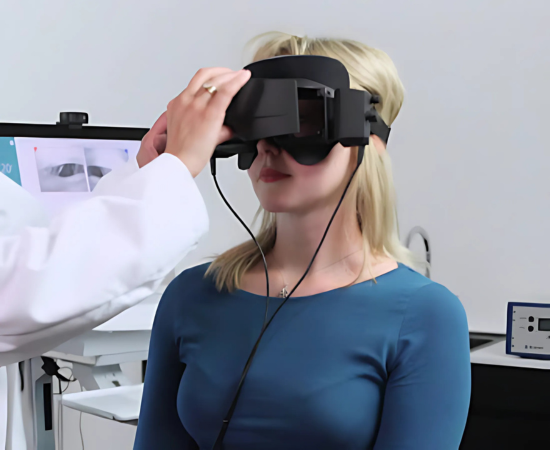
Video Nystagmography
Have you ever felt like the room is spinning or had trouble maintaining your balance? These symptoms often start in the inner ear, which is responsible for detecting movement and sending signals to the brain to help you stay balanced. If something goes wrong in this system, you may experience vertigo, dizziness, or unsteadiness. Your brain uses both your inner ear and your eyes to maintain balance. If your inner ear isn’t working properly, your eyes make rapid, jerky movements called nystagmus. By studying these movements, doctors can figure out where the problem lies — whether it’s in the ear, the brain, or the nerves connecting them.
Video Nystagmography (VNG) is a specialized test that records your eye movements to help diagnose the cause of dizziness, vertigo, or balance disorders. Since the eyes and inner ear are closely connected in maintaining balance, this test provides critical insights.
Why is it done?
- Diagnose unexplained dizziness
- Detect inner ear or brain-related balance issues
- Understand causes of vertigo or falls
- Identify disorders like BPPV and Meniere’s Disease
How the Test is Performed
- Infrared goggles are placed around your eyes
- Warm or cool air/water stimulates the inner ear
- You follow light patterns or perform guided head movements
- Eye responses are recorded and analyzed
What VNG Can Diagnose
- Benign Paroxysmal Positional Vertigo (BPPV)
- Vestibular Neuritis
- Meniere’s Disease
- Labyrinthitis
- Neurological issues like stroke or MS
Benefits of VNG
- Non-invasive and painless
- Accurate and reliable results
- Helps create a targeted treatment plan
- Safe and clinic-based test
What is Videonystagmography (VNG)?
- Videonystagmography (VNG) is a specialized test that helps doctors understand why a person might be experiencing dizziness, vertigo, or balance issues. It does this by tracking eye movements, as the eyes provide critical information about the inner ear and brain’s function.
The Key Concepts
Nystagmus : This is the medical term for involuntary eye movements (like jerky or rapid eye movements). Your eyes make these movements to help maintain balance, and the type of nystagmus you experience can indicate whether there’s an issue with your balance system (the inner ear or the brain).
- Inner Ear and Balance: The inner ear contains structures called the vestibular system that are responsible for detecting movement and helping your body maintain balance. When these structures are disrupted, it can result in vertigo or dizziness. The eyes are controlled by the same part of the brain that processes information from the inner ear, so when the inner ear isn’t functioning properly, the eyes often exhibit abnormal movements, like nystagmus.
How the Test is Done
Preparation:
- The test is non-invasive, meaning no surgery or needles. You’ll typically be asked to sit in a chair, and sensors are placed around your eyes.
- For the test to work properly, you might be asked to stop taking certain medications, particularly those that affect balance or eye movements, in the days leading up to the test.
The Test Itself:
- Caloric Stimulation:
One part of the test involves irrigating (or stimulating) each ear with warm or cool air or water. This creates a temperature difference in the ear canal, which makes the fluid in the inner ear move and simulates head movement. It causes your eyes to move, and the test measures how they react to this stimulation. - Eye Movements:
You’ll then be asked to follow a light or move your head in specific ways. The doctor will look for abnormal eye movements (nystagmus) that could indicate issues with your vestibular system or the nerves that control eye movement.
Infrared Video
- To track your eye movements, doctors use special infrared goggles. These goggles capture detailed images of your eyes’ movements as they react to various tests, like head turns or visual stimuli. The video helps the doctor see even tiny, rapid eye movements that might otherwise be missed.
Head Movement and Visual Tests
- After the caloric stimulation, the doctor may ask you to move your head in certain directions or look at specific patterns. This can help pinpoint whether the issue is due to the inner ear, the brain, or something else.
What the Test Can Diagnose
VNG is most often used to diagnose conditions like
Benign Paroxysmal Positional Vertigo (BPPV)
- This is a common cause of dizziness, where tiny crystals in the inner ear become dislodged and cause spinning sensations.
Vestibular Neuritis
- This is inflammation of the vestibular nerve, which can cause sudden vertigo and imbalance.
Meniere’s Disease
- A condition that affects the inner ear and causes episodes of vertigo, ringing in the ear (tinnitus), and hearing loss.
Labyrinthitis
- An infection or inflammation of the inner ear that can lead to vertigo and balance issues.
Central Nervous System Disorders
- VNG can help identify if the problem is coming from the brain (e.g., a stroke or multiple sclerosis), as certain eye movements can point to neurological problems.
What It Reveals
The pattern of eye movements (nystagmus) can tell the doctor:
- If there’s a problem in the inner ear (e.g., the vestibular system).
- If the brain is involved (e.g., an issue in the central nervous system).
- Which ear is causing the problem (because symptoms might only occur in one ear).
Why It’s Useful
- Accurate Diagnosis: VNG is a very useful tool for diagnosing the root cause of dizziness and balance problems. It gives doctors specific insights into the function of the vestibular system.
- Non-Invasive: Unlike some tests, it doesn’t involve surgery, injections, or a lot of preparation. It’s a relatively straightforward procedure.
- Treatment Planning: Once the doctor understands what’s causing the dizziness or vertigo, they can recommend specific treatments. For example, physical therapy like vestibular rehabilitation (to retrain the brain and inner ear) or medications to treat underlying causes.
- Possible Side Effects: Since the test involves head movements, you might experience dizziness or mild nausea during or after the procedure. This is normal and should pass once the test is over. If you do feel unwell, it’s important to let the medical team know right away.